
Stop and Save

FullSizeRender 5

Warning: This post is silly.

Earlier this month, I had the immense honor of attending the first ever NerdCon: Stories—a two day writing conference in Minneapolis, Minnesota featuring some of my favorite, young adult writers.

There were panels, there were signings, there were famous authors reading their adolescent and angst-filled stories and poems, and there were drag races. Yes, drag races where our beloved John Green caught fire! If you don’t believe me, see my tweet (pictured) or Google because it happened.

And, while I was watching John Green’s car burn (twice), I thought, It’s a good thing he saves his work*. Let me rewind the day’s events.

Earlier that afternoon, I sat in on the “Nerdfighter Q&A” panel featuring John Green, his brother, Hank Green, and the hilarious and intelligent Maureen Johnson as their moderator. Between laughs and John locking Hank out of his own iPhone, brother-style, an audience member asked how Hank’s book was coming along, and he replied (and I paraphrase), “It’s going well. That is, if I can get the book off my broken laptop.”

“Wait,” Paraphrased-Maureen-and-John said, aghast, “you didn’t back up your book?”

That’s right, folks. Hank Green—the Internet mogul, video blogger, curator of NerdCon, brother of very famous writer, general man of mystery—didn’t save his work.

To be fair to Mr. Green, he was writing using writing software; however, he didn’t back up said software.

Luckily for Hank and the world, it looks like he’ll be able to retrieve the book from the incapable laptop with the help of geniuses. Yet, I think there is a lesson here, and that lesson is simple: Save your work.

Personally, I thought this was a very obvious thing that everyone knew in 2015, but if a man who shares DNA with John Green forgot to do it, perhaps there are others out there making the same mistake.

So, how do you save your work? No, I’m not going to talk you through how to save a file (Step one: click the floppy disk; Step two: if you don’t know what a floppy disk is, Google). Instead, I’m going to link to a slew of programs and tools for writers to help you write and save your work. And then I’m going to remind you to back up your files, so consider yourself reminded.

I would provide a lesson on these tools, but that would make me a total hypocrite, as I don’t use them. I’m super old fashioned; I still use Microsoft Word and save the docs to my email. But before you judge, know this: THIS IS EXACTLY WHAT JOHN GREEN DOES (he said so in the panel), and any comparison to John Green is just fine with me.

So, happy writing, friends. But more importantly, happy saving.


*Actual thoughts were: 1) He can’t die! He’s got too much writing left in him! 2) WAIT, DOES HE KNOW HE’S ON FIRE?! 3) Some curse words I can’t say on this blog because wholesomeness.
I am now the proud owner of a shiny, new writing group

IMG_1108


Last month, I co-created a writing group.

Two friends from my college writing program and I all voiced a mutual desire to receive feedback on projects we’ve been working on post-degrees (albeit, very intermittently post-degrees). While we deeply enjoy one another’s company—oh, how good it is to discuss books and writing and poetry again!—we’re a hodgepodge group of sorts. Well, that is, our projects are all very different.

For me, last year I began the tumultuously slow process of writing a young adult novel, and I wanted someone else to read the pages and point out glaring character development issues, plot inaccuracies, etc. Another friend is working on a historical fiction novel set during WWII, and the other is working on her poetry collection. Again, it’s quite the variety. And while I’m certainly no poetry expert, and they don’t often read YA fiction, I’ve already found their feedback to be immensely helpful.

(For the most part) outsiders of the YA world, their fresh perspective is revitalizing. They’ve only read the first three chapters and already I can see that I’ve got some work to do, and I’m excited to revise. And while, in my opinion, these outcomes alone immensely validate our meetings, this is not the sole reason why I added one more thing to my already full calendar.

I committed to my writing group—and the other members agree with me—for a sense of accountability to create new material.

Perhaps you’re not like us. Perhaps you have excess pockets of time and energy left in your day to create. And if that is you, kudos. But that is not us. We are busy. Our lives are filled with work, relationships, social activities, errands, working out (or, you know, thinking about working out), and the list could go on for a thousand years.

A while back, I wrote a blog post about making time to write. I was so optimistic that I could commit to it and make it work. And I was so wrong. But a writing group has clout. And I’m excited to try this out. I’m excited to see what I can create and excited to help others create.

So, want to be a part of a writing group? I have no fancy Internet tips on how to connect with other writers in your area. In fact, I have very little advice about this. I knew a plethora of writers and desired to do this for years before it finally happened.

But, you don’t have to know a lot of writers to get great feedback on your work. Ask anyone in your network: friends, family, former teachers, librarians, avid readers. But really, readers love to let you know what they liked and what they didn’t. Before you know it, you’ll be swimming in feedback.

And if that doesn’t work? Well then, there are always editors!

Some Thoughts on Dialogue

IMG_3739

I once read a book where the characters and their words clashed like navy socks with black shoes.

It was a tale of kings and palaces in a world of lavish customs and strictly held decorum. Yet, the dialogue between the two teenage protagonists—one of whom was royalty—was colloquial…and not in a good way. There were many awkward uses of “hey” and, if my memory can be trusted, even a use of “cool” (yes, as in, “Yeah, that sounds cool.”).

I wanted to like the story. I wanted to root for the characters and their inevitable happy ending. Yet, I stumbled over the unnatural dialogue the entire length of the book. Needless to say, it is not among my favorites.

The characters and their speech didn’t fit. I didn’t believe a young prince would speak as candidly and carelessly as he did in the world in which he lived. And as a result, I didn’t believe his character.

On the other side of the spectrum, I once read a novel where the prose was very casual, yet the characters spoke very formally to one another. In fact, this particular author chose to rarely include contractions in dialogue. A conversation between the protagonist and her best friend felt more like a political debate than a girls’ night out.

Simply put, voice matters—especially in dialogue.

My fellow editors just hosted a contest where each piece was assessed on the author’s use of voice. In fact, the contest’s “tagline,” if you will, was “Voice is King.”

So, how do you write believable dialogue brimming with a character’s voice?

Here are a few tips:

  • The character’s speech should sound like the character. As a general rule, a teenager should sound like a teenager. A prince should sound like a prince. And if they don’t, there should be a good reason why. For example, the teenager is a former spelling bee champ, and thus, has a larger vocabulary. Or the prince would rather charm young maidens than learn how to govern his kingdom. Otherwise, a run-of-the-mill teenager wouldn’t use the word “acrimonious,” and a dignified ruler wouldn’t walk up to a pretty girl and say, “Hey. What’s up?”
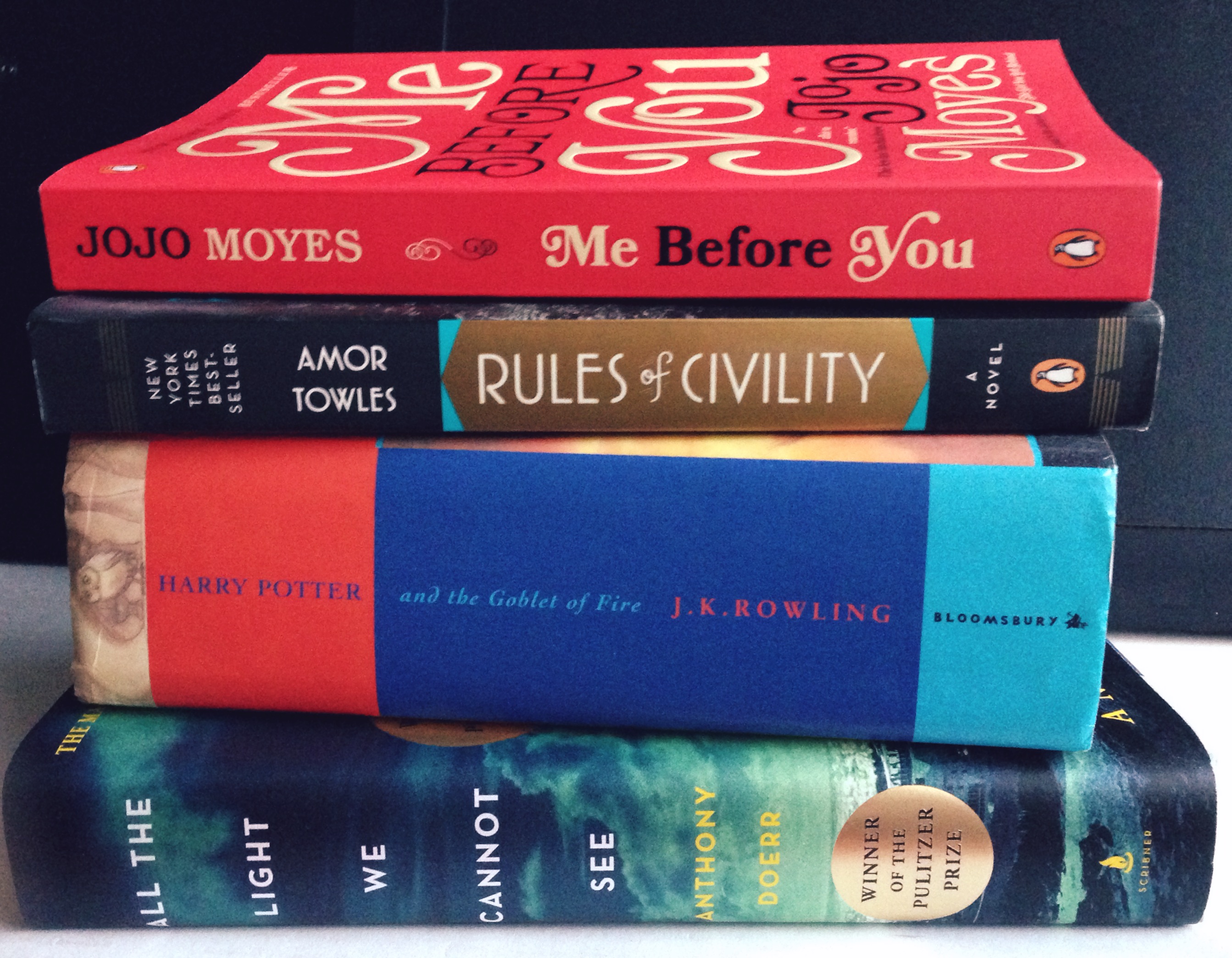
  • Read some of the greats. Sure, Shakespeare knew a thing or two about dialogue, but unless you’re writing a period piece, I’d steer clear. Reading modern plays or screenplays, however, is a different story. Plays and movies are mostly dialogue. Pick one up. Or take great notes during a movie. If that’s not your thing, John Green is pretty much the master of teenage wit. And J.K. Rowling successfully wrote thousands of pages in which three children became adults, so there’s a full spectrum to study. Jhumpa Lahiri also does this beautifully in The Namesake, a book that follows a young boy from birth well into adulthood.
  • Fill out a character questionnaire. The more you know about the character, the better you will be able to write his or her voice. Here’s one and two that I like.

For the record, writing dialogue can be really hard. After all, writing can—and often is—difficult. But if there is a story to tell, I believe it’s worth the blood, sweat, and tears. So, friends: battle on.

The Best Writing Advice

IMG_3474

Repost! But so worth it…

The best writing advice I ever received: read what you want to write like.

This idea may be simple, but it’s also a very effective one. Read prose or poetry that inspires you. Read what you want to imitate. After all, imitation is the best form of flattery, right? So, flatter away. And just so I’m clear, I’m not giving you free reign to plagiarize. Instead, I’m saying good art is catching.

I have a friend who is a brilliant graphic designer. And she has an inspiration board, containing anything and everything that inspires her creativity: pictures, fonts, fashion, patterns, people, etc. When stuck on a project, she’ll often update her board, filling her visual world with things that will help her be a better artist.

Writers also have inspiration boards; we call them bookshelves.

In college, my writing professor encouraged us to read poetry for ten minutes before we wrote. She ardently believed poetry, with its lyrically articulate grace, would rub off on our personal essays, prose, or poems. She believed it would improve our diction (word choices) and would open up new and creative perspectives of our own work. And I agree with her.

So am I saying that you have to read poetry? No (although, I hope you do), but I am saying you need to read something good.

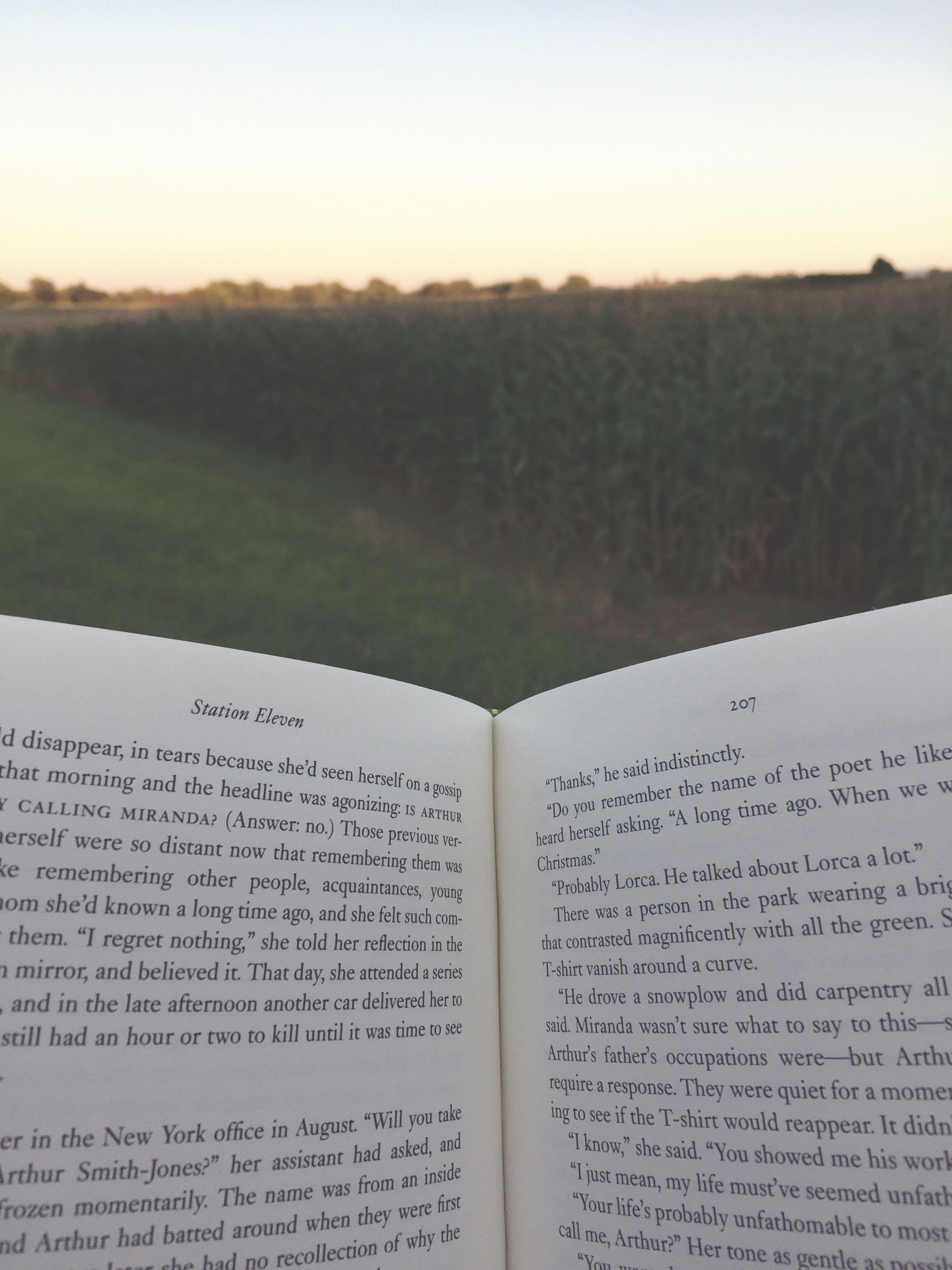
Whether it’s an old favorite or a new one, let good books infect you in the best way possible. Let well-written, beautifully crafted prose and poetry influence your writing style. Let witty characters and sublime plot lines feed your imagination.

So, read, read, and then read some more. Read like your own work depended on it. Subconsciously absorb every good word.

Need some recommendations? Here are some of my favorites from my very own inspiration board:

  • Poetry: Walking to Martha’s Vineyard, Franz Wright
  • Creative Non-fiction: The Liars’ Club, Mary Karr
  • Realistic Fiction: Bel Canto, Ann Patchett
  • Short Stories: Interpreter of Maladies, Jhumpa Lahiri
  • Fantasy Fiction: The Night Circus, Erin Morgenstern
  • Science Fiction: Red Rising, Pierce Brown
  • Young Adult Realistic Fiction: Saving Francesca, Melina Marchetta
  • Young Adult Fantasy Fiction: The Scorpio Races, Maggie Stiefvater
  • Fairy Tales: Cinder, Marissa Meyer
  • Middle Grade: The Lightening Thief, Rick Riordan
  • And Harry Potter for everything

I’d love to hear your recommendations. Comment below with your favorites.

Now, off to the library! The books are waiting.

Cheers,

Kaleigh