Getting the Most Out of Your Critique

Let me tell you a secret.

I don’t like it when people edit my work. I groan inwardly whenever I see a lengthy list of suggestions from a critique partner. Sometimes I may even groan outwardly.

It’s not that I take critiques personally. I don’t want people to tell me my writing is perfect for the sake of my ego. I want people to tell me writing is perfect because doing revisions is a lot of work and when I type “the end” I’m ready to be done and move on to something else.

But since the revision process is essential to good writing, I’ve come up with a list of strategies for getting the most out of your critique.

  1. Don’t get discouraged. Don’t let a critique make you think you’re a bad writer. And for sure don’t let it make you think you’re a bad person. It’s very normal for beginning (and even experienced) writers to get discouraged. But just don’t let it. Remember that even the best writers have to revise. It’s just part of the process and doesn’t reflect on you.
  2. Take some time. I almost always need to take some time to let the critique sink in. During that time I’ll work on other things. It allows me to be more objective when I return to the revisions at a later time.
  3. Look at revisions as a challenge. Think of revisions like a puzzle you’re trying to solve. Treat it like a game. Doing so will make you more eager to solve the problems. Furthermore, revising with this attitude will make it more likely that you’ll look for really thorough solutions rather than just a patch for problem areas. It leads to more thorough revisions.
  4. Brainstorm. Get out a pen and paper and jot down some ideas. Or bounce ideas off your friends. You’d be amazed at the power talking out loud has to generate new ideas.
  5. Try writing in a new environment. This can be something as small as changing the font or printing the manuscript off rather than reading it on a screen. At any rate, try something new. This especially helpful the longer you’ve been working with the manuscript. It helps keep your eyes from glazing over the words you’ve read too many times.
  6. Realize that some things get easier. I don’t really believe that writing ever becomes easy. But some aspects of writing do become more natural. I’ve struggled a lot with dialogue tags. But the more it’s been pointed out to me, the more aware of it I’ve gotten during first drafts. While I’m still learning, this is one area where the skills have become a little more natural.
  7. Practice. The more you do revisions, the less daunting they become. You’ll get better at working your way through problems. So, like everything in life, you’ve got to practice.

I’ll finish by saying that while revisions are a lot of work, they are also totally manageable. Whatever it is, you can fix it and your manuscript will be that much better for it.

This is four of the drafts from my undergraduate thesis. The project probably underwent 15 extensive revisions before being ready to defend.

Some Thoughts on Dialogue

IMG_3739

I once read a book where the characters and their words clashed like navy socks with black shoes.

It was a tale of kings and palaces in a world of lavish customs and strictly held decorum. Yet, the dialogue between the two teenage protagonists—one of whom was royalty—was colloquial…and not in a good way. There were many awkward uses of “hey” and, if my memory can be trusted, even a use of “cool” (yes, as in, “Yeah, that sounds cool.”).

I wanted to like the story. I wanted to root for the characters and their inevitable happy ending. Yet, I stumbled over the unnatural dialogue the entire length of the book. Needless to say, it is not among my favorites.

The characters and their speech didn’t fit. I didn’t believe a young prince would speak as candidly and carelessly as he did in the world in which he lived. And as a result, I didn’t believe his character.

On the other side of the spectrum, I once read a novel where the prose was very casual, yet the characters spoke very formally to one another. In fact, this particular author chose to rarely include contractions in dialogue. A conversation between the protagonist and her best friend felt more like a political debate than a girls’ night out.

Simply put, voice matters—especially in dialogue.

My fellow editors just hosted a contest where each piece was assessed on the author’s use of voice. In fact, the contest’s “tagline,” if you will, was “Voice is King.”

So, how do you write believable dialogue brimming with a character’s voice?

Here are a few tips:

  • The character’s speech should sound like the character. As a general rule, a teenager should sound like a teenager. A prince should sound like a prince. And if they don’t, there should be a good reason why. For example, the teenager is a former spelling bee champ, and thus, has a larger vocabulary. Or the prince would rather charm young maidens than learn how to govern his kingdom. Otherwise, a run-of-the-mill teenager wouldn’t use the word “acrimonious,” and a dignified ruler wouldn’t walk up to a pretty girl and say, “Hey. What’s up?”
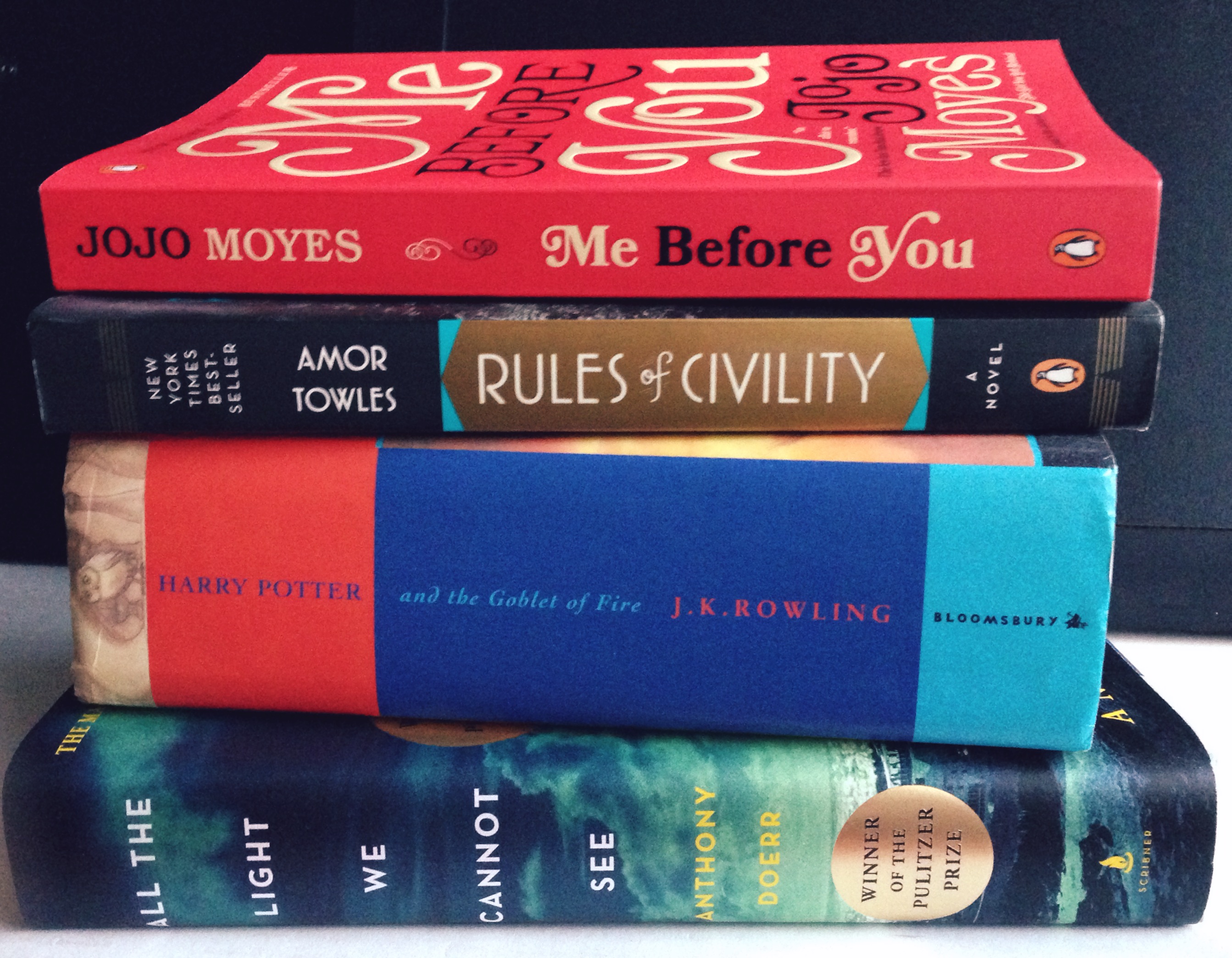
  • Read some of the greats. Sure, Shakespeare knew a thing or two about dialogue, but unless you’re writing a period piece, I’d steer clear. Reading modern plays or screenplays, however, is a different story. Plays and movies are mostly dialogue. Pick one up. Or take great notes during a movie. If that’s not your thing, John Green is pretty much the master of teenage wit. And J.K. Rowling successfully wrote thousands of pages in which three children became adults, so there’s a full spectrum to study. Jhumpa Lahiri also does this beautifully in The Namesake, a book that follows a young boy from birth well into adulthood.
  • Fill out a character questionnaire. The more you know about the character, the better you will be able to write his or her voice. Here’s one and two that I like.

For the record, writing dialogue can be really hard. After all, writing can—and often is—difficult. But if there is a story to tell, I believe it’s worth the blood, sweat, and tears. So, friends: battle on.

#pg70pit is here!

RIGHT NOW I’m hosting a new type of contest and pitching opportunity for writers with complete, polished novels (Middle Grade, YA, or NA/Adult) in any genre except erotica.

What makes 70-pit different?

No 35-word pitch, no query, no first page.
Age categories are submitted on different days and will be given equal attention.

The YA entry form will go live today at 7am and close at 7pm Central Standard Time. The NA/Adult entry form will go live tomorrow, July 3rd.

On 7/7, the 21 entries with the top-rated voice will go live on my (Lara’s) blog, with an additional 7 entries per age category being posted on co-hosts’ blogs. Roughly 30 agents will view the entries and make requests for queries, partials, or fulls.

On 7/14, 4 MS Editors will announce editing giveaways to entries of their choice.

Information about the contest, submission forms, and winning entries can or will be found at bit.ly/pg70pit

image

6 Writing & Editing Lessons from My Students

owl-47526_640

When I’m not editing, I’m teaching writing classes for 7th-12th grade students at a homeschool co-op. It’s a lot of fun—the students all have unique minds and different writing abilities, and I love watching them grow in their academic and creative writing.

As different as the teens all are, there have been specific issues that tend to repeat in their writing. As I’ve taught them to grow in these areas, I’ve realized that it’s not just kids making these mistakes. They’re common to writers of all ages, and if the weaknesses can be universal, so can the lessons on how to fix them.

Here are six of the lessons for better writing that I taught my students. I’ll be covering each of them in more depth on my personal blog in July, but this overview will hopefully get you thinking about what you can do to kick your own writing up a notch. Continue reading 6 Writing & Editing Lessons from My Students