Writing is definitely a learned skill. While a lot of the writing skill is self taught through practice, it’s also incredibly helpful to learn from other writers. And fortunately, there are many writers who are willing to share their tricks of the trade with you. Today I’ve decided to give you some of the writing resource books that I’ve found most useful.
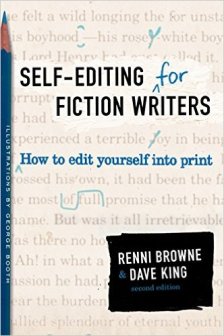
Self-Editing for Fiction Writers
I first encountered this book as an editing minor at BYU. We used it as the text book for our substantive editing class. This book has received quite a bit of hype, and I think it lives up to it. It has great use of concrete examples to illustrate points. This really is one of the best books for identifying problems that many beginning writers encounter.
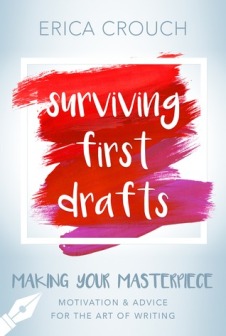
Surviving First Drafts
Writing a first draft is a complete roller coaster. If you’re like me, you have a plethora of manuscripts that you started and never finished because you lost steam or you started chasing a shiny new idea. This book is all about giving you strategies to actually get those drafts done. Also, Erica is pretty funny. So that makes it a fun read.
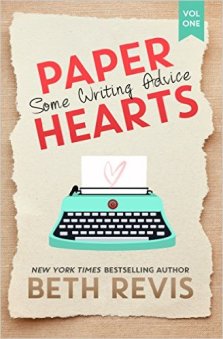
Paper Hearts
There are three books in the Paper Hearts series. Admittedly, I’ve only read the second, which is publishing advice. I loved that book, though, and I can’t wait to read the other two books in the series (which are about writing and marketing). The publishing book covered a lot of ground, and I would definitely recommend it to anyone wondering how to get a book out into the world.
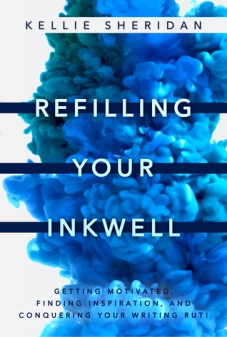
Refilling Your Inkwell
Everyone experiences writers block sometimes. It’s especially frustrating when you experience a prolonged case of it. I recommend this book to anyone whose found themselves in a writing rut and wants to get out.
Those are some of my favorites, but I know there are lots of other great writing books out there. Let me know what some of your favorites are!
In a world built on creativity, this may seem like a big faux pas. But writers old and new alike agree: Everything worth telling has (probably) already been told. In fact, a writer I admire recently talked about borrowing material when stuck (point number 7).
While this may sound discouraging, I find I freeing. I’ve let go of this idea of “finding the perfect story” or the “untold story.” Instead, I focus on a story that I love to tell, hoping that my personal passion for the characters and the world will blur over the page and charm the reader.
In fact, I recently read a popular book that claimed to be well-known fairytale retelling. I, personally, love fairytale retellings and this particular fairytale just happened to be my favorite. So, I gravitated toward this book like Newton and, well, gravity. Yet, I found myself…bored. The problem, for me, was that it too closely resembled its namesake. Until—wham!—the author pulled out a stunning and unpredictable third act, setting up her story for a future series, making the whole thing entirely her own.
So, what am I saying? Two things:
It’s okay to borrow for inspiration. We all do it. My own novel—as original as I thought it was in its conception—I’ve come to realize is structured a lot like Peter Pan. And guess what? That’s okay! Because…
It’s still my own story. It has similarities with Peter Pan, but it’s completely my own idea, my own twist on what the world may know of as Peter Pan.
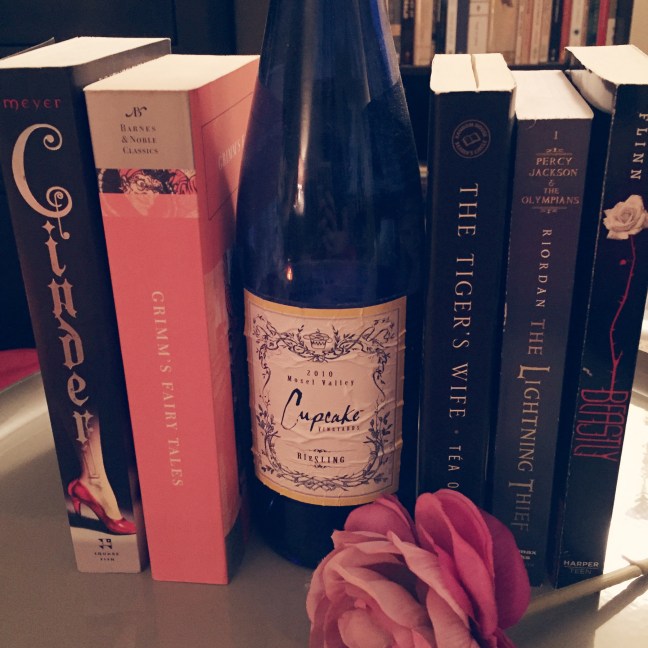
If you’re borrowing from a story—good for you! Take pride in your inspiration. Just ensure your muse is just that—only a muse and not a lens through which your entire story is told. And if you’re facing the dreaded writer’s block and need some inspiration, take a look at the picture above; maybe one of those stories can spark a wildfire.
Well, currently I’m reading Bossypants by Tina Fey, and in it she gives the rules of improv and describes how these rules have changed her life. The rules are as follows:
Say “YES”
Say “YES, AND…”
Make statements
There are no mistakes, only opportunities
Applying these rules to your writing will help you soldier through a crummy first draft by shutting up your internal editor. The trick is to improv against yourself.
Say “YES”
Stop arguing with yourself and start writing. Stop saying you can’t do it, or it’s too hard, or you need to learn more before you can start. Just start. Your improv partner (you) might be crazy, but go with it. In fact, craziness usually translates into energy, so embrace the crazy and hammer out that draft.
Now, obviously in real life you’re not always going to agree with everything everyone says. But the Rule of Agreement reminds you to “respect what your partner has created” and to at least start from an open-minded place. Start with a YES and see where that takes you.
Jason Merritt / Gettyimages
Say “Yes, AND…”
Rather than tearing at or criticizing what you’ve already created, build on that and create in a different direction.
If I start a scene with “I can’t believe it’s so hot in here,” and you just say, “Yeah…” we’re kind of at a standstill. But if I say, “I can’t believe it’s so hot in here,” and you say, “What did you expect? We’re in hell.” Or if I say, “I can’t believe it’s so hot in here,” and you say, “Yes, this can’t be good for the wax figures.” Or if I say, “I can’t believe it’s so hot in here,” and you say, “I told you we shouldn’t have crawled into this dog’s mouth”–now we’re getting somewhere.
Maybe you’ve written yourself into a corner. Maybe you’ve hit a writer’s block. Don’t stop, don’t backtrack, don’t correct. Just blast through that obstacle in the weirdest way imaginable. Keep moving forward, as Walt Disney would say. Don’t stop moving forward until you’ve typed “The End;” then go back and start revising.
This is a positive way of saying “Don’t ask questions all the time.” … In other words: Whatever the problem, be part of the solution. Don’t just sit around raising questions and pointing out obstacles.
Have enough confidence in yourself that if you come to an obstacle, you’ll be able to get through it. If you need to, take inspiration from fictional characters. It’s their job to overcome obstacles.
There are no mistakes, only opportunities
If I start a scene as what I think is very clearly a cop riding a bicycle, but you think I am a hamster in a hamster wheel, guess what? Now I’m a hamster in a hamster wheel. I’m not going to stop everything to explain that it was really supposed to be a bike. Who knows? Maybe I’ll end up being a police hamster who’s been put on “hamster wheel” duty because I’m “too much of a loose cannon” in the field.
If your improv partner (you) screws up a scene for you, just go with it. If your characters don’t cooperate with your plot, change your story. In fiction, you might be a writer who outlines or meticulously plots beforehand, but between Chapter One and The End, your characters are the monarchy. You might be an omnipotent god-with-a-keyboard, but your characters still need free will. Forcing your characters to abide by your plan turns them into objects, not characters.
In improv there are no mistakes, only beautiful happy accidents.
Look, as an editor, I’m not going to tell you that everything you write is going to be good enough for publication. But it is good enough for you to spend time writing it. Every thing you write is one step towards becoming a better author, even if those pages live in a drawer or only twelve people read your book and ten leave horrible reviews. You are enough, whether you are published or not. Even if you count a scene or an entire manuscript as a failure, you are not a failure. You accomplished something. You wrote something no one else could.
Everyone falls and everyone fails. The difference between an unpublished writer and a published one is grit—perseverance and resilience despite mistakes.
When you think you’ve messed up, work with it. When you’re knocked down, get back up again. I’m rooting for you.
This video is a great illustration of perseverance:
I don’t watch the show “Mad Men,” but I was inspired when fellow MS Editor Lara Willard sent me an article by the show’s creator, Matthew Weiner.
His is a story that most writers and creatives can relate to: the need to write no matter what, coupled with years of rejection. He didn’t let it stop him; on the contrary, he says, “Rejection enrages me, but that ‘I’ll show you!’ feeling is an extremely powerful motivator.”
I know that feeling. I had two “I’ll show you!” moments with college mentors, and both have stuck with me ever since. The first was my advisor, who told me straight-up, “You’ll never be assertive enough to be a freelancer.” When I got the taste of the work, though, of using what I knew about good writing to help other writers become better writers, I was hooked. I knew I had to prove her wrong, so I grew, I did the work, and I succeeded.
I got a chance to talk to that advisor the other day, and I told her that story. She told me that I hadn’t been assertive enough in college, but that she could tell that I had grown. We parted happily, and not until after she had told me that she was really, really happy to be wrong.
An “I’ll show you” moment also came up in my own creative writing. I’ve always loved to create using words, but the pressure to perform in college creative writing classes killed my storytelling almost completely. A teacher told me that the thing I wanted to create didn’t and couldn’t exist (side note: it does!), and I knew in that moment that it was going to be my life goal to prove her wrong, too. I wanted to write, and well. I wanted to create my specific thing, and I wanted it to succeed.
I hope it does. While my journey as an editor is well underway, my journey as a writer is just beginning. Matthew Weiner has something to say about that, too:
“The most defeatist thing I hear is, ‘I’m going to give it a couple of years.’ You can’t set a clock for yourself. If you do, you are not a writer. You should want it so badly that you don’t have a choice. You have to commit for the long haul. There’s no shame in being a starving artist. Get a day job, but don’t get too good at it. It will take you away from your writing.”
My “day job” is editing now, and I do want to stay “too good” at it. Having said that, I am working to set aside time in my days for creative writing. It’s not just the “I’ll show you!” feeling motivating me; it’s what I need to do.
I know that many of you are in that same boat. You’ve had people tell you that your writing just doesn’t cut it, or that your stories just don’t have a place in this market. You’ve received more rejection letters than you would care to admit, and you’re starting to wonder if you’ll ever make it. If that’s true, read Matthew Weiner’s full piece here. See how rough the journey to “Mad Men” was for him, and let him tell you why he stuck with it. Then, think about what it is that makes you stick with your work.
Don’t ever give up–if writing is who you are, it’s worth every ounce of struggle and work you put into it. As long as you’re writing, you’re succeeding at being who you have chosen to be.



 MS Editors