This is a topic I’ve covered quite a bit on my own website, but I still see a lot of writers struggling to include stakes in their query. So we’re going to talk about it again here.
So you’re writing your query. It’s going well. You’ve established your setting. You’ve established your characters. You’ve even got some good conflict going. That’s all great! Now you want to end your query with maximum level impact. Something that will leave the reader with that I-gotta-have-this-immediately feeling.
How do you achieve that effect? If you can’t guess from the title of this post, the answer is stakes. Character, setting, and conflict are all necessary aspects of your query. But really standout queries also rely on clearly established stakes.
Stakes are more than just conflict. Stakes are what your main character stands to lose if they don’t win the conflict you’ve already presented. Without stakes, there’s no real reason to care whether the main character succeeds or not.
Would we care whether Frodo could destroy the ring if the fate of Middle Earth didn’t hang in the balance? Would we care whether Katniss could win the Hunger Games if failure didn’t mean death? Probably not. In your query letter, you need to be clear about what happens if the main character can’t successfully resolve the conflict.
If you’re unsure how exactly to do this, I have a simple formula I recommend. It goes as follows:
Main character must do [insert really hard thing] or else [insert really bad thing] will happen.
You can play with the wording, of course. But that’s the gist of it. Not too hard, is it?
Don’t leave your reader wondering why they should care. Give them stakes!
While attending a book signing for Pierce Brown’s third installment in the Red RisingTrilogy this week, an audience member asked him about a topic that often plagues creatives: Writer’s Block.
Brown’s admitted he experienced severe writer’s block while writing the book we were all there to celebrate. His solution was a practical, simple, and one that I believe merits respect. Far more eloquently than I’m able to recreate it here, Brown said this: At some point, you have to stop [weighing the options] and make a decision.
It’s easy for us to obsess over finding the perfect answer, the rainstorm in our drought, and wait for a magic-filled epiphany. But sometimes, the best thing you can do for the sake of your craft is make a decision and move forward.
And here is the beauty of the art we call ours: We can change it. If the solution to your plot hole or character development doesn’t fit, you can rework it. To write is to rewrite. Again and again. Because no one, not even the best writers, get everything right the first time. We’re exploring our world, our imaginations, and the worst thing writer’s block does is hinder this momentum. So don’t let it.
Commit to a decision, a solution. And if it’s not right for your piece, that’s all right. You get to try again, each time more informed than the last.
In this short video (<4 min), I discuss Story. What is “STORY” in the archetypal sense of the word? How does it differ from plot? What can the Harry Potter series teach us about Story?
View the video to see the Harry Potter clips. Otherwise read the transcript below.
TRANSCRIPT
Hi, I’m Lara, a writer, editor, and story coach, and I’m going to teach you a little bit about story.
[Verity Lane channel jingle]
What is story?
To answer that question, I want to take the most well-known story probably the world has ever seen—Harry Potter.
What is Harry Potter about?
Is it about a young boy named Harry Potter and his adventures as he attends Hogwarts School of Witchcraft and Wizardry, learns how to perform magic, and comes face to face with his archenemy, Lord Voldemort?
When you think about Harry Potter, if you’ve seen the movies or read the books, what lasting images come to mind?
Why do you think Harry Potter is such a lasting series?
Is it because Harry Potter was the chosen one?
<CLIP> Hermione: She’s only interested in you because she thinks you’re the chosen one. Harry: But I am the chosen one.
<end Clip>
Because he’s a wizard that goes to a wizarding school?
(Clip of Hogwarts)
Is it this, him fighting an arch nemesis?
<CLIP> (Harry and Voldemort cast spells and curses)
<end CLIP>
Or is it this?
(Harry, Hermione, and Ron after the Battle of Hogwarts)
Harry Potter’s wizarding school, his abilities, the places, the characters that are so complex and lifelike and lovable—these are just characters; these are just ideas. They’re concepts. And concepts don’t make a story.
They don’t even make a plot.
I once defined story as “a character believably interacting and conflicting en route to a goal.”
That’s plot. You have a character with a goal, and then you have a character trying to reach that goal, amidst all of these conflicts getting in the way. The longer your story, the more conflicts they have.
But that’s plot.
So what’s story?
Story is an irreversible change from beginning to end.
“You’re a Wizard, Harry!”—that’s the beginning of the story, right? That’s when Harry learns that he’s a wizard…
No, that’s the beginning of the plot.
The story begins when Harry loses his family.
The story ends when Harry has a new family.
The Story of Harry Potter is a boy who finds friends, and belonging, and a family. That’s the Story of Harry Potter. That is the underlying Story that all of us can believe in and all of us can understand. The plot shows us the Story.
Check out bit.ly/videogameway to see how story goals made the stories of Harry Potter, The Hunger Games, and How to Train Your Dragon.
I’ve talked about plot at length. I have a whole series of the 8 C’s of Plot that you can use to map out your story if you’re an outliner or a planner.
If you’d like to find out more about what makes a story, how to write plot…this spring, I’m launching StoryWorldCon, an online convention for writers of stories of any genre, for any ages. StoryWorldCon is going to be a place for you to meet other writers, to exchange work with them, to find critique partners, and to also learn from me how to write a story, how to come up with ideas, how to revise your story, and how to get that story out to agents.
I’m so excited about this, and I can’t wait to share more information! But that’s going to have to wait until later this spring, so stay tuned!
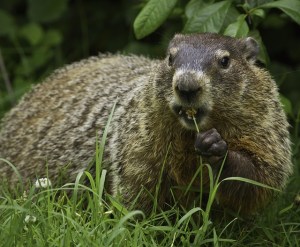
Yesterday was Groundhog Day, and Punxsutawney Phil didn’t see his shadow. According to tradition, that means spring is coming early!
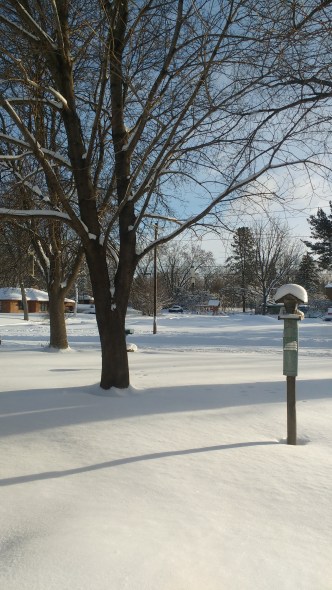
It doesn’t exactly look like it yet. Here in the Midwest, a winter storm just dumped a foot of snow in less than 24 hours, and I know we’re not the only ones still seeing white.
Whether you live in a snowy place or just have cooler temps now than normal, the idea of winter is still present, begging you to curl up with a warm cup of tea or hot chocolate and read and write the short days away. That’s good! But it’s also good to get out of that cozy chair and step out the door, no matter what the weather is doing.
Do it right now. Take a break from that great novel you’re reading or writing, and get out there—the more uncomfortable the weather, the better! I promise that this is constructive, not just crazy. Check out these five reasons for getting out of the house and then make it happen.
1: Give your eyes a break.
If winter means that all of your non-work hours are going into reading, writing, and Netflix, you’re putting a lot of strain on your eyes. Don’t take them for granted! Even with glasses, I’ve found that too much time spent in front of a screen gives me eye pain, headaches, and increased irritability. It will do your head wonders to get outside, where you can let your eyes adjust to better lighting and a greater range of focal points.
2: Give your circulation a boost.
Sitting for long periods is not good for your circulation, and that little twinge in your hand or leg isn’t going to just go away on its own. Winter encourages us all to embrace hibernation, but this arrangement can wreak havoc on your system! Unlike Phil, you are not a groundhog. Running up and down the stairs every half hour will help a little bit, but why not add some fresh air to the mix? Get your heart pumping, your lungs filling, and your limbs loosening, and things will hurt a lot less in the long run.
3: Shock your system.
If it’s really cold or snowy where you live, bite the bullet and get outside. If it’s only mildly colder than normal where you live, try stepping out the door in summer clothes. Either way, feel that winter air! It’s not going to be comfortable at first, but that’s the point. Embrace it. Shake up your routine. Get out of your comfort zone. By letting your body reset, you’ll also reset your mind and be ready to get back to work with a fresh look at what you’re doing. There’s nothing like freezing air or a cold rain to wake you up!
4: Live a new story.
Wherever you live, go experience February. What makes it different than August? How are the people around you spending the winter? What unique opportunities or challenges force you to change things up? You can’t write living characters unless you yourself are willing to inhabit the world around you. Go live. Make your own life a winter story, and use what you learn to become a better writer.
5: Take some photos.
They say a picture is worth a thousand words. For writers, a picture can easily inspire a thousand words. Go outside and pay attention to the little visual details. How does the silhouette of a leafless tree seem to you? Are there bushes bent under the weight of ice and snow? What does it look like for city lights to shine over a frozen lake? What kind of dirty puddles does February produce? Take a photo log of what February looks like and save it—those details are the ones that make our world real, and you can use them to create reality in writing, too.
Do it now.
You can’t fool me; I know you’re on the internet right now. If you weren’t, you wouldn’t be reading this post! It’s time to get offline and step out your door. What does February 3rd look like where you are? Describe it in the comments below, or tweet your pictures @ekbuege. I’ve posted mine below.
Remember, winter isn’t the time for readers and writers to quit living in the real world; it’s the time for us to remember just how important it is.