Writing Like an Entrepreneur: Learning From the Founder of TOMS Shoes

This past week I tagged along to my husband’s company-wide annual meeting, expecting a lot of alone hotel time, some coffee shop stops and few ‘mandatory fun’ events. But this year had some pleasant surprises in store.

The very first meeting, Blake Mycoskie, the founder of TOMS shoes, walked onto the stage! (At this point you’re probably wondering what this story has to do with writing at all. Patience, my friend.)
blake

Writing like an entrepreneur

Of course, his story of TOMS was inspirational, funny and tear jerking. But very quickly I began to realize that what he learned as an entrepreneur could be easily applied to the writing life as well.

Entrepreneurship and writing both share many themes. Both involve ideation, inspiration, and a lot of hard work. The following ideas are concepts that Blake shared and that I want to pass forward. I hope they bring you the focus and inspiration they’ve already brought me.

Give ideas a chance

When Blake birthed the idea of TOMS shoes, he had just finished a day of delivering shoes to kids in Argentina. To him, it was just a thought about how to keep kids in shoes and, ultimately, in school. But the next day when he shared it with an Argentinean friend, the friend was ecstatic. This friend’s passion and belief in the idea began to rub off on Blake, and before he knew it, they were making shoes out of a couple Argentinean garages. 

The point: Give your ideas a chance. If a book, story or character comes to you in the wee morning hours, or while sitting at your desk at work, run it by a friend and see what they think. You might be surprised how quickly your idea can take shape if you just give it a chance.

Practical tip: Start an idea notebook. Make sure it’s small enough to carry with you, so as ideas come you can jot them down.

Learn from your critics

As TOMS began to take off, it wasn’t long before the very public criticism came. At first, Blake was angry. Couldn’t they see how many people he was helping? Then, he ignored them. Finally, he decided to listen. He invited some of his critics into his office to really hear them out. What he soon realized was that some of their critiques were actually true. Even though he didn’t like the way they went about it, he was able to learn from the critics and improve his business-model.

The point: Maybe you won’t always like how someone criticizes you, but that doesn’t me what they say doesn’t hold value. Do your best to evaluate what you can implement to improve your manuscript.

Practical tip: Check out Kyra’s post on getting the most out of your critique! 

Use the experts

Blake was the first to admit that he wasn’t exactly shoe-savvy. So when things began to take off, he knew he needed to hire some experts in the field. He quickly hired a few people with previous experience at some of the largest shoe distributors. Later, when his people said it was time to diversify his shoe inventory, he listened. TOMS continued to explode.

The point: If you’re having trouble getting your MS off the ground, it’s probably because you’re in need of some expert insight. Find experienced editors, query experts, and agents to help you along the way. There’s no shame in getting help, and it’s pretty unrealistic to think you can do it all on your own.

Practical tip: Start with (non-friend) beta readers, then get yourself an editor and go from there.

What’s your next step?

Now that you’ve learned from Blake, what is your next step? Do you simply need to jot down some ideas? Do you need to re-visit criticism or pursue an editor? Whatever the case, I hope you give your MS a chance and start to write like an entrepreneur!
Some Thoughts on Dialogue

IMG_3739

I once read a book where the characters and their words clashed like navy socks with black shoes.

It was a tale of kings and palaces in a world of lavish customs and strictly held decorum. Yet, the dialogue between the two teenage protagonists—one of whom was royalty—was colloquial…and not in a good way. There were many awkward uses of “hey” and, if my memory can be trusted, even a use of “cool” (yes, as in, “Yeah, that sounds cool.”).

I wanted to like the story. I wanted to root for the characters and their inevitable happy ending. Yet, I stumbled over the unnatural dialogue the entire length of the book. Needless to say, it is not among my favorites.

The characters and their speech didn’t fit. I didn’t believe a young prince would speak as candidly and carelessly as he did in the world in which he lived. And as a result, I didn’t believe his character.

On the other side of the spectrum, I once read a novel where the prose was very casual, yet the characters spoke very formally to one another. In fact, this particular author chose to rarely include contractions in dialogue. A conversation between the protagonist and her best friend felt more like a political debate than a girls’ night out.

Simply put, voice matters—especially in dialogue.

My fellow editors just hosted a contest where each piece was assessed on the author’s use of voice. In fact, the contest’s “tagline,” if you will, was “Voice is King.”

So, how do you write believable dialogue brimming with a character’s voice?

Here are a few tips:

  • The character’s speech should sound like the character. As a general rule, a teenager should sound like a teenager. A prince should sound like a prince. And if they don’t, there should be a good reason why. For example, the teenager is a former spelling bee champ, and thus, has a larger vocabulary. Or the prince would rather charm young maidens than learn how to govern his kingdom. Otherwise, a run-of-the-mill teenager wouldn’t use the word “acrimonious,” and a dignified ruler wouldn’t walk up to a pretty girl and say, “Hey. What’s up?”
  • Read some of the greats. Sure, Shakespeare knew a thing or two about dialogue, but unless you’re writing a period piece, I’d steer clear. Reading modern plays or screenplays, however, is a different story. Plays and movies are mostly dialogue. Pick one up. Or take great notes during a movie. If that’s not your thing, John Green is pretty much the master of teenage wit. And J.K. Rowling successfully wrote thousands of pages in which three children became adults, so there’s a full spectrum to study. Jhumpa Lahiri also does this beautifully in The Namesake, a book that follows a young boy from birth well into adulthood.
  • Fill out a character questionnaire. The more you know about the character, the better you will be able to write his or her voice. Here’s one and two that I like.

For the record, writing dialogue can be really hard. After all, writing can—and often is—difficult. But if there is a story to tell, I believe it’s worth the blood, sweat, and tears. So, friends: battle on.

Sometimes Less is More

shorter

As an undergrad, I was a teaching assistant for a writing class designed for computer science majors. While some of the students were very good writers, many hated writing and really struggled with the class. Most of the assignments were short—one paragraph of ten typed lines—and we deducted points if the assignment was too long.

One student in particular complained when he lost points for writing something twice as long as the assignment required. He argued that he had done more than the required amount of work and should be rewarded. What he didn’t understand was that when it comes to writing, longer isn’t always better, and shorter is often harder.

It’s not hard to see where the longer-is-better mindset comes from. Most class assignments have minimum page requirements, not maximum page requirements. But some of the hardest writing you’ll ever do will be making something long shorter. You’ll need to fit the synopsis for your entire book into a query letter. You’ll have to convince the school of your dreams that you’re a great applicant in a one-page statement of purpose. You’ll have to squeeze your hilarious story into a 140 character tweet. Short is hard!

Writing something long forces you to use a lot of words, but writing something short forces you to use them economically. That’s what makes it difficult. In shorter pieces, each word needs to be working for its keep, and you need to be judicious in knowing which words are doing the work most effectively.

The good news is that learning to write under tight length constraints will improve your longer works too. You’ll learn to choose words that get a lot of bang for their buck, and that will make you a better writer.

The Best Writing Advice

IMG_3474

Repost! But so worth it…

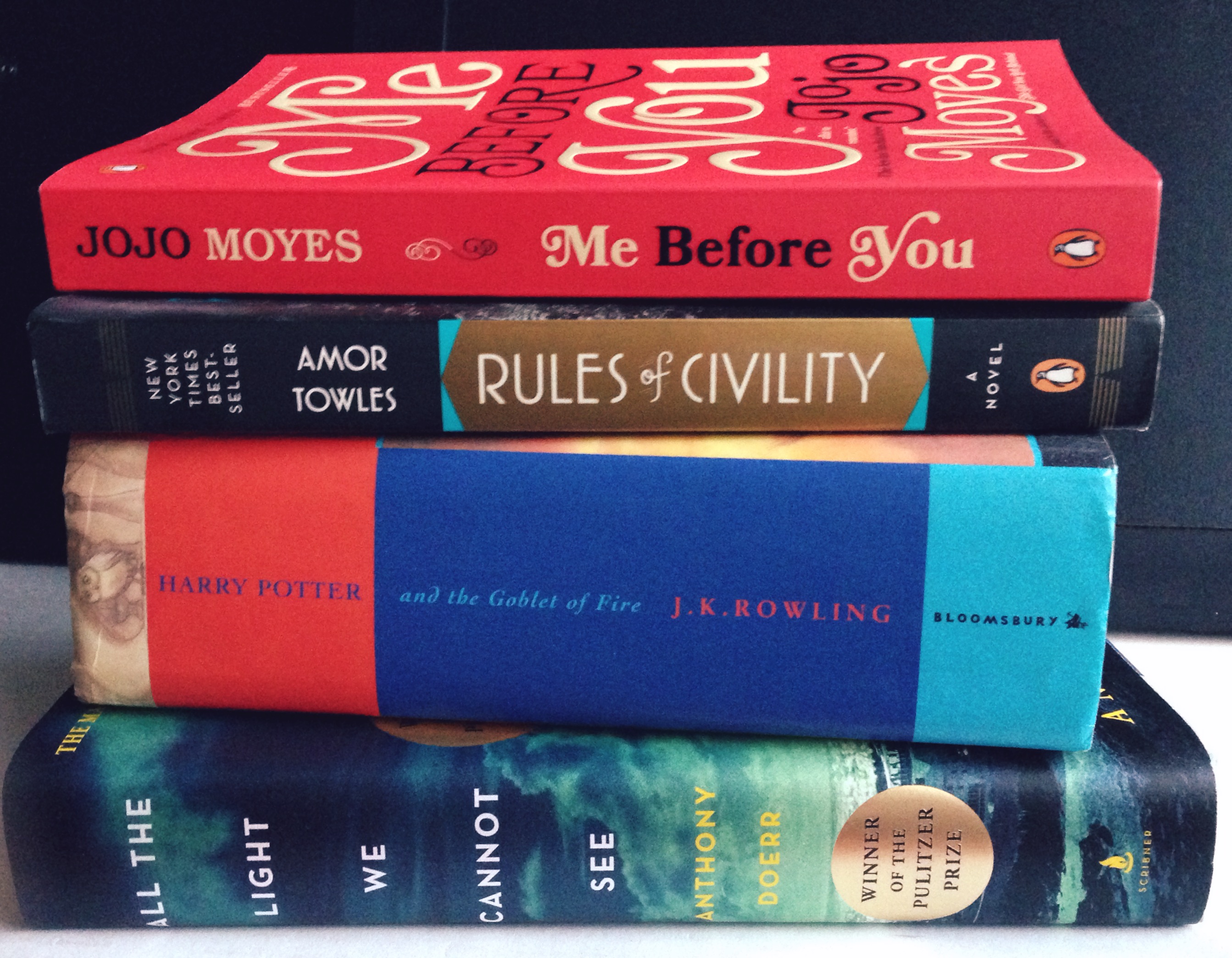
The best writing advice I ever received: read what you want to write like.

This idea may be simple, but it’s also a very effective one. Read prose or poetry that inspires you. Read what you want to imitate. After all, imitation is the best form of flattery, right? So, flatter away. And just so I’m clear, I’m not giving you free reign to plagiarize. Instead, I’m saying good art is catching.

I have a friend who is a brilliant graphic designer. And she has an inspiration board, containing anything and everything that inspires her creativity: pictures, fonts, fashion, patterns, people, etc. When stuck on a project, she’ll often update her board, filling her visual world with things that will help her be a better artist.

Writers also have inspiration boards; we call them bookshelves.

In college, my writing professor encouraged us to read poetry for ten minutes before we wrote. She ardently believed poetry, with its lyrically articulate grace, would rub off on our personal essays, prose, or poems. She believed it would improve our diction (word choices) and would open up new and creative perspectives of our own work. And I agree with her.

So am I saying that you have to read poetry? No (although, I hope you do), but I am saying you need to read something good.

Whether it’s an old favorite or a new one, let good books infect you in the best way possible. Let well-written, beautifully crafted prose and poetry influence your writing style. Let witty characters and sublime plot lines feed your imagination.

So, read, read, and then read some more. Read like your own work depended on it. Subconsciously absorb every good word.

Need some recommendations? Here are some of my favorites from my very own inspiration board:

  • Poetry: Walking to Martha’s Vineyard, Franz Wright
  • Creative Non-fiction: The Liars’ Club, Mary Karr
  • Realistic Fiction: Bel Canto, Ann Patchett
  • Short Stories: Interpreter of Maladies, Jhumpa Lahiri
  • Fantasy Fiction: The Night Circus, Erin Morgenstern
  • Science Fiction: Red Rising, Pierce Brown
  • Young Adult Realistic Fiction: Saving Francesca, Melina Marchetta
  • Young Adult Fantasy Fiction: The Scorpio Races, Maggie Stiefvater
  • Fairy Tales: Cinder, Marissa Meyer
  • Middle Grade: The Lightening Thief, Rick Riordan
  • And Harry Potter for everything

I’d love to hear your recommendations. Comment below with your favorites.

Now, off to the library! The books are waiting.

Cheers,

Kaleigh